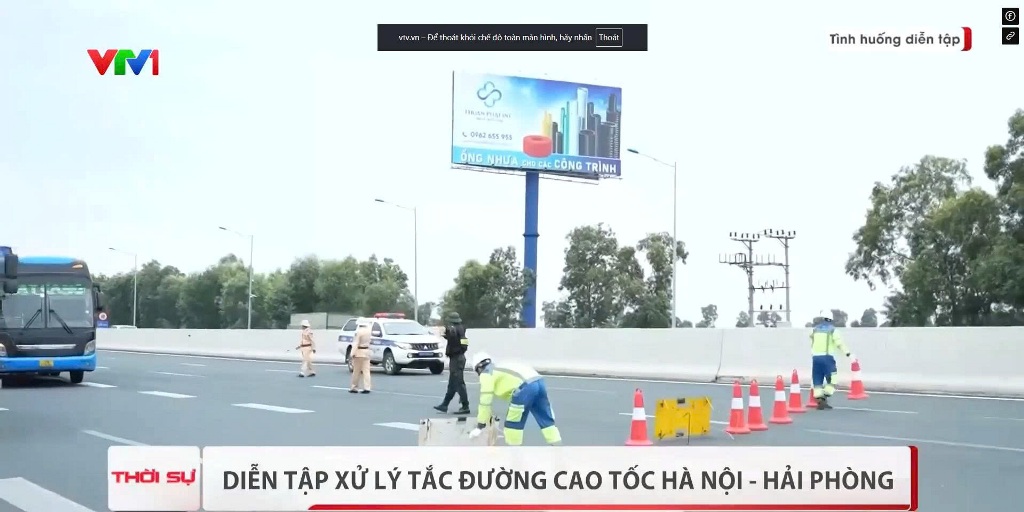
Highway 5 and the manager's concerns


On these days, the whole country is jubilantly celebrating the 70th anniversary of the August Revolution and National Day September 2. This is also an opportunity for every Vietnamese person, whether in the country or our relatives abroad to visit the country, to have the same feeling about the miraculous changes in many areas of life, economy, and society.
One of the most recognizable areas is the change in infrastructure systems, roads... that have been built in all parts of the country; In which the Hanoi - Hai Phong expressway is a very important transport infrastructure project that is being urgently completed; forming a vivid traffic picture in the process of industrialization and modernization of the country.
VIDIFI is investing in the Hanoi - Hai Phong expressway and will put the entire route into use in early December 2015. Accordingly, when this expressway is put into operation, it will make an important contribution to ensuring traffic safety, shortening travel time, saving costs for people and businesses when traveling from Hanoi and some provinces to Hai Phong and vice versa. At the same time, it will reduce the load on National Highway 5. But National Highway 5 is still an important traffic route, connecting with many regional roads serving residential clusters and industrial and urban areas on both sides of the road.
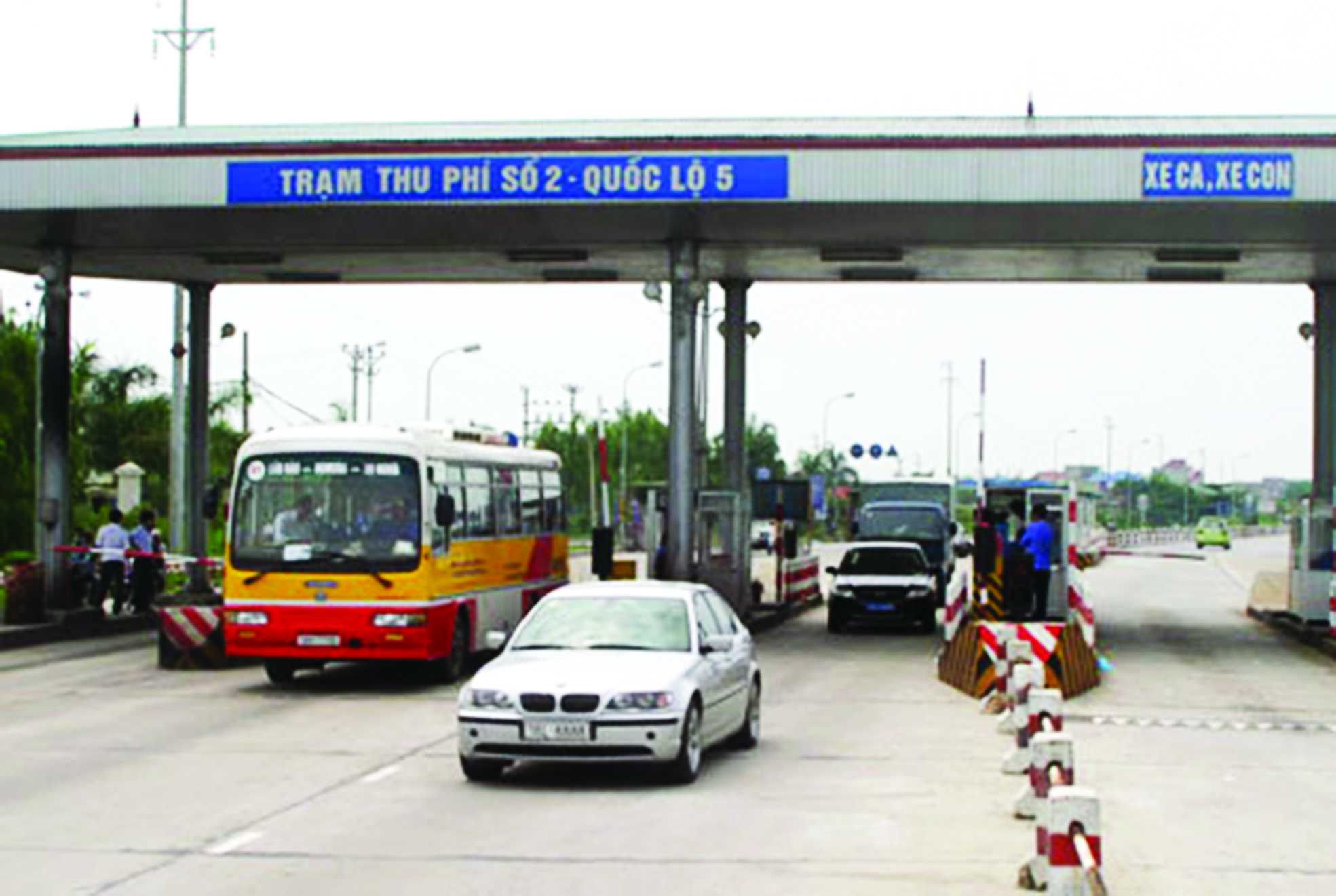
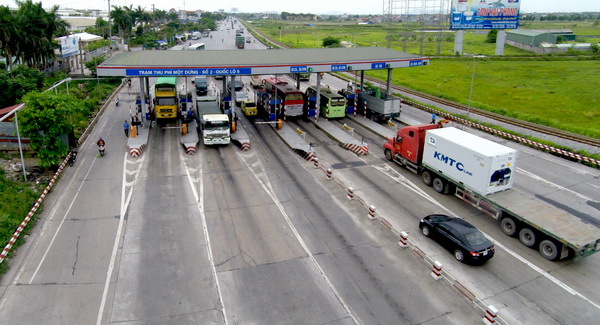
Vehicles circulate through toll station No. 2, National Highway 5
However, looking at the current situation of National Highway 5, there are some issues that managers and public opinion cannot handle. That is the situation where overloaded and oversized vehicles are running every day and every hour on Highway 5, which means that Highway 5 is deteriorating at a rapid pace. Many rutted sections need to be repaired. The maintenance staff on this route once contacted me and said: according to the designers' regulations, the maximum load of both the vehicle and the cargo on the vehicle running on Route 5 is only allowed up to H30XB80. With that load, line 5 can still withstand it. But since the removal of weighing stations located at some points along the route, a series of overloaded trucks have appeared.
In fact, there are trucks transporting steel billet, carrying heavy cargo up to more than 80 tons (double the allowable tonnage). When discovered and forced to stop for inspection, due to the lack of means of weighing, measuring, and counting, the vehicle owners refused to leave. And to avoid being inspected and controlled, recently, according to the long-range direction of business owners, drivers when overloaded often travel at night. On average, every day and night, there are about 600-700 overloaded vehicles running on this route. I wonder if business owners and vehicle owners feel sorry for State assets and the people? It's not clear whether they know that to have that route, the State spent thousands of billions of dong for everyone and every family to enjoy, but just for profit, they ignored everything and became the culprits who sabotaged Route 5 and destroyed national assets, which public opinion demands must be strictly handled.
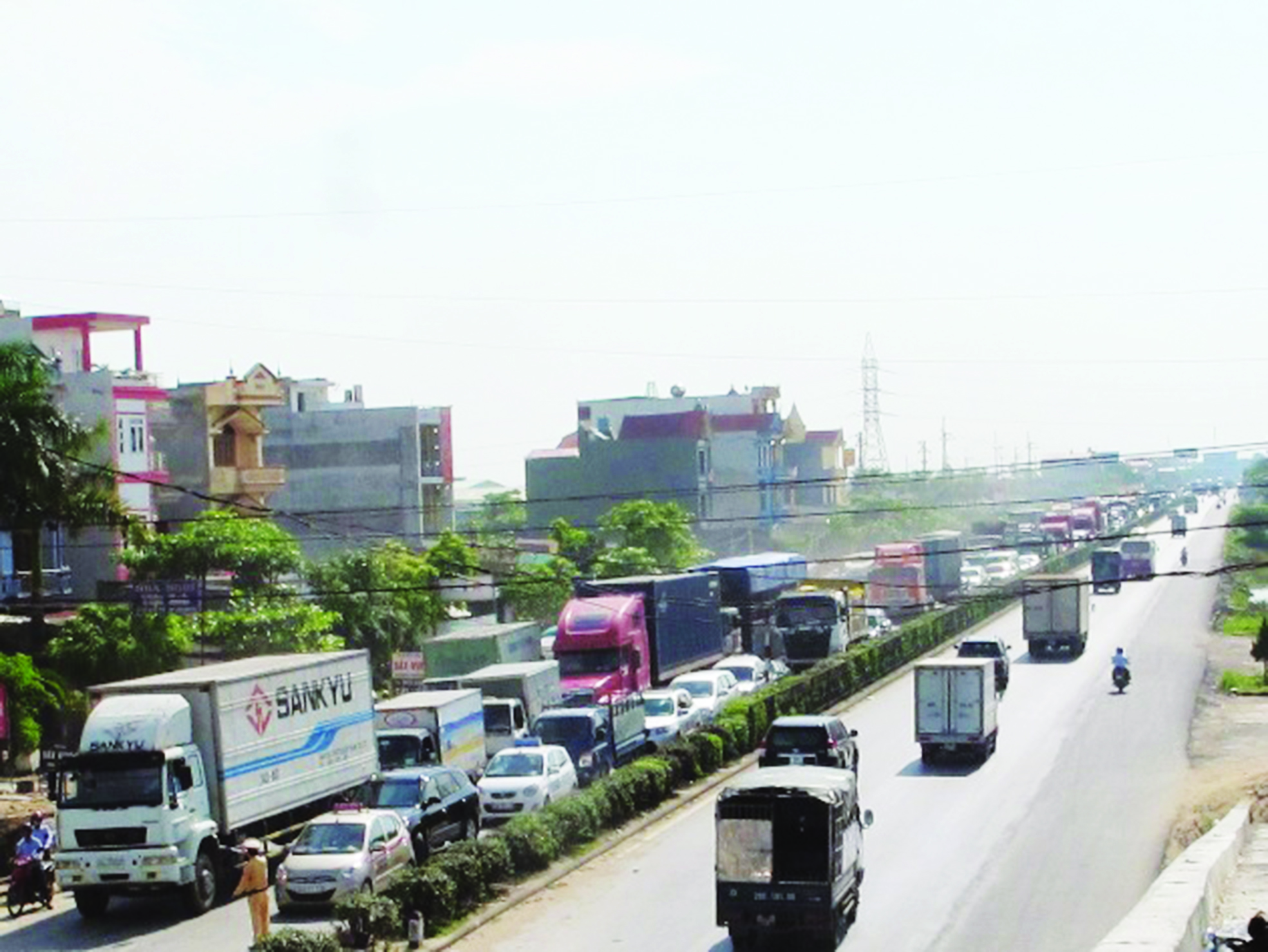
Vehicles circulating on National Highway 5 are always overloaded
Another negative phenomenon taking place on Highway 5 as well as many other roads in our country, touching everyone's heart, is the situation in which the median strip of this route has many sections being arbitrarily demolished by people to make private paths. These are very dangerous intersections for vehicles participating in traffic. Roughly on the road of a few dozen kilometers, from Hanoi to Hai Phong, we counted dozens of places where the median strip was dug and scraped. The median strip was kicked down. Some places are just large enough to fit a motorbike or bicycle, while others are 3 meters wide to fit a farm vehicle. Although the Road Management Company has repaired it many times before, the above situation still continues.
Statistics from traffic accidents occurring on the entire route show that this is a cause of accidents and destruction of State property. People don't know that, to have a median strip with rows of beautiful green trees, every year, the State has to spend billions of dong to plant trees and pay salaries to hundreds of workers. That is not to mention the large amount of money that the National Highway 5 Traffic Management Company spent to repair damaged and destroyed median strips.
Yet another situation that is also causing headaches for managers is the self-cutting of land to open roads from the gates of companies, businesses, and projects connecting Road 5. This situation, along with the phenomenon of land encroachment, opening of tents and roadside shops, not only destroys the inherent beauty of a traffic project, polluting the ecological environment, but also creates a rapid "urbanization" movement for Road 5.
Actually, when there is a project along the route, the Project Management Board needs to have an agreement with the road management agency to create reasonable entrances and exits. But in reality, many businesses, when implementing the project, opened the intersection of Road 5 with the entrance gates of agencies and factories, causing many areas of this road to be divided into pieces, affecting the beauty and environment. Faced with the above situation, the construction of public overpasses is a positive solution to ensure traffic order and safety at intersections. But some overpasses on Highway 5 have little effect. Many traffic participants who do not use the overpass casually run across the road, easily causing accidents. To resolve the above situation, the Prime Minister has issued Resolution 13 and Directive 04, which clearly state: Clearing encroachment on sidewalks and road corridors is the responsibility of local authorities; That is a regular key task of the grassroots authorities. Unfortunately, this issue is still overlooked.
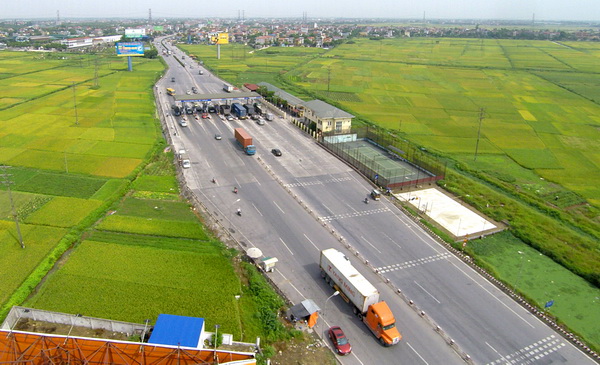
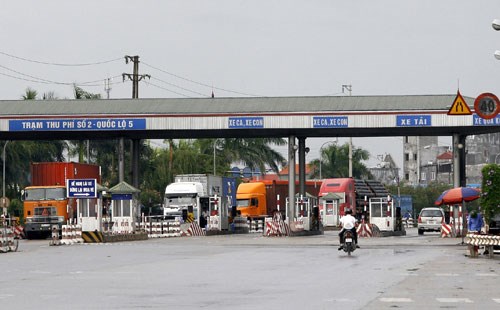
Toll station No. 2, National Highway 5 after being upgraded
It would be a mistake to mention the pressing issues taking place on Route 5 but ignore the toll collection activities at toll stations on this route. To be fair, when Road 5 comes into use, the policy of placing toll stations is completely correct, because from this revenue source, the State will have more money to cover road restoration and maintenance, and gradually repay the initial loans to invest in road construction.
Another shortcoming that needs to be mentioned is that the current road user toll rate on National Highway 5 has been kept the same since 2005 when the National Highway 5 toll collection began (no adjustment for 10 years now) and is the lowest fee in the country. Meanwhile, the road user toll rates on national highways have been adjusted to increase according to the framework prescribed in Circular 159, 2-3 times higher than the currently collected toll fees on National Highway 5 (such as Tan De Station - National Highway 10, Dai Yen Toll Station - National Highway 18, My Loc Toll Station - National Highway 21B...).
Highway 5 was put into use in 1998 and has seriously degraded so it must be repaired and renovated. Therefore, since 2012, the Ministry of Transport and VIDIFI had to deduct nearly 700 billion VND from the budget and funds from toll revenue to invest in the Project to renovate and restore the road surface of National Highway 5 to ensure traffic safety and maintain the ability to exploit National Highway 5 (this project is invested by the Vietnam Road Administration.
Therefore, strengthening the management of National Highway 5 in accordance with the actual needs of the route, preventing overloaded vehicles, restoring traffic order on the route and organizing toll collection at reasonable rates is necessary to ensure safety and smooth traffic from Hanoi - Hai Phong, making an important contribution to the socio-economic development of the Northern Delta region./.
Source: Luu Vinh (KD&PL Newspaper)